Skip to content
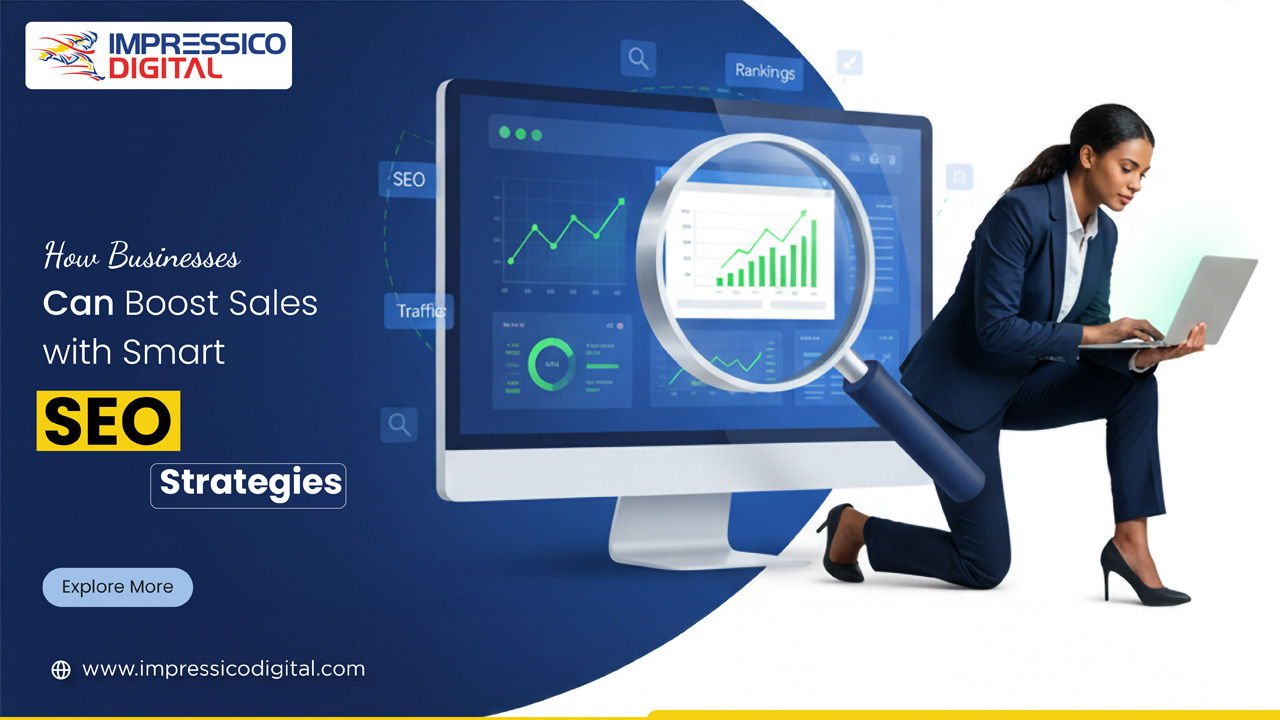
In the modern-day online market, a glitzy website or a “we’re online” checklist is no longer sufficient. Companies must engage customers at the very moment customers are looking. That’s where SEO Strategies for business growth come in. Implemented correctly, search engine optimization turns into a reliable source of traffic, leads and eventually sales. We help companies navigate this process, adjusting every step to their market, audience and growth objectives.
Why SEO Is Important for Business Success
The place of organic search
Organic search remains the top for many business results: when individuals seek solutions, products or services, they tend to start with a search engine. Organic search is the leading driver of website traffic for most businesses, making SEO essential rather than a choice.
And in addition to just driving more traffic, SEO allows you to reach quality traffic—individuals that already possess intent, making it more likely you’ll convert them into buyers.
Important facts that demonstrate the case
The following are some significant figures that highlight the importance of using good SEO Strategies for business development:
- Over 53% of all website traffic is generated from organic search.
- For companies, successful ROI from SEO campaigns typically shows up in the 6-12 months range, with maximum returns during years 2-3.
- The worldwide market for SEO services is expected to reach around $173.89 billion by 2029, up from an estimated $79.45 billion in 2024.
These statistics inform us that: (a) SEO is responsible for significant traffic potential, (b) ROI exists but requires ongoing work, and (c) the market itself is expanding, which means competition expands as well.
Core SEO Strategies for Business Growth
The following are the underlying pillars we employ at our agency within the scope of SEO Strategies for business development.
a) Keyword Research & User Intent
Instead of merely pursuing high-volume keywords, the trend is toward knowing why someone is searching. According to Search Engine Journal, search is no longer about words—it’s about intent.
So target keywords that indicate what your audience is looking to do (buy, compare, find, fix) and then create content that responds to those requirements. And think about long-tail keywords—they have less competition and more conversion value.
b) Technical SEO & Site Experience
Your site needs to be accessible, fast, and mobile-friendly. Search engines review not only what you say, but also how you say it. From site speed to mobile responsiveness to secure browsing (HTTPS), these elements affect rankings.
Technical clean-up is among the quickest wins: repairing crawl errors, page load improvement, ensuring your site is indexable, and organizing your site in a proper manner.
c) Content Strategy & Relevance
After you’ve learned what your audience is looking for, you need to provide high-value content. In mind: blogs, guides, FAQs, and landing pages that answer directly relevant questions—and incorporate your SEO Strategies for business growth organically.
Here’s where you establish credibility, keep visitors engaged, and guide them through your funnel.
d) Backlink & Authority Building
Search engines evaluate your site based on how other people perceive you. Good backlinks from strong domains are still a powerful indicator of authority. Bad backlinks or no backlinks expose you to being attacked.
Therefore, some part of your plan needs to involve outreach, guest posts, collaborations, or content that organically gains links.
e) Local SEO (where applicable)
If your company operates within a geographic area or has physical offices, local SEO has got to be on your radar. Being optimized for “near me” searches, local citations, reviews, and map listings can deliver high-intent traffic.
f) Monitoring, Analytics & Iterative Improvement
SEO is not “set it and forget it.” You need to track performance (traffic, rankings, conversions), analyze what works/what does not, and then tweak the strategy. Since the search environment is changing so quickly, keeping ahead of these changes is paramount.
How These Strategies Translate into Sales
1. From traffic to qualified leads
Traffic alone won’t guarantee sales. But when SEO brings in users with real intent—and your site delivers the right message and experience—those visits become leads. Then your conversion rate and funnel become critical. A well-optimized site with on-page messaging and calls to action smooths the pathway from interest to sale.
2. Building brand credibility and trust
When your site keeps appearing for the right searches, and you have content that helps people, you gain authority. They trust you. That trust manifests the moment they are comparing you to alternatives. The regular visibility from having the right SEO strategy builds up to help you get more branded searches, repeat visits and referrals.
3. Conversion optimization synergy
SEO lays the foundation; conversion optimization and user experience complete the task. When you match search intent → landing page message → offer → conversion path—you maximize the return on your traffic. This matching is an integral part of SEO Strategies for business success that most businesses tend to overlook.
Common Pitfalls and How to Avoid Them
- Ignoring user experience / mobile: A slow-loading, non-mobile-friendly site that irritates users will not only lose traffic, but also lower its rankings and cut down its conversions.
- Chasing keywords without intent: Attracting visitors to the site using general, high-volume words without considering their intention to buy is a futile exercise, as the traffic will point nowhere.
- Neglecting technical health: The entire strategy is undermined by server errors, bad links, copies of files, or just forgetting to put metadata.
- Believing SEO is a fix-it-and-forget-it solution: SEO is an ongoing process. Continuous updates of algorithms alongside the activity of competitors and fluctuations in search habits dictate the need for change.
- Solitary work: The SEO plan has to be in sync with other channels—content marketing, paid, social—and aligned to the overall business goals.
Executing the Strategy with an Agency (or In-house)
Collaborating with us gives the customer a full-fledged approach to SEO strategies for business development: research → technical execution → content execution → monitoring → optimization.
Budgeting & realistic timeframes
Groundwork (site audit, keyword mapping, and technical fixes) can be expected to be completed within the first 1-3 months. Traffic increases usually begin to show in 4-6 months, and when it comes to sales impact, the 6-12 month period or longer is the norm.
What to anticipate: short-term vs. long-term
- Short term: immediate advantages from technical solutions, easy keywords, and content renewal.
- Long term: guaranteed rankings, trust in the brand, more conversions, plus the effect of growing traffic and sales compounding.
At Impressico Digital, we support clients through both periods, with realistic expectations set and results measured.
Conclusion
If you are serious about growing your business, increasing sales, and building long-term digital power, making SEO Strategies for business growth a priority is one of the best decisions you can ever make. By using the strategies outlined above, matching traffic to intent, and tracking results, you build a growth engine that keeps paying dividends.
Ready to get started? Let’s discuss how we can craft your personalized SEO roadmap and fuel growth together.
FAQ
Q1: How long does it take before SEO begins to show results?
Generally speaking, you will probably see a bit of improvement (in terms of better rankings and more visitors) in about 3-6 months; however, the overall impact on sales is often 6-12 months or longer. This depends on the competition, niche, site’s current condition, and the pace of your plan’s implementation. Statistics show that maximum ROI usually occurs in the second or third year.
Q2: Is SEO something I could manage myself, or should I hire an agency?
You can certainly do SEO on your own—keyword research, basic technical repairs, and content optimization. However, to implement a complete, successful growth plan with tracking, sophisticated tactics, and alignment with your business goals, an agency or expert may often speed your outcome and save you from expensive mistakes.
Q3: What would be the minimum amount I need to spend on SEO?
There is no such thing as one size fits all. The budget is dependent on your market, competition, goals, and the current state of your website. However, it would be better to consider SEO a medium to long-term investment rather than a one-time cost. The most effective campaigns usually take 12-24 months at a minimum for maximum effect.
Q4: What would be the proof that my SEO Strategies for business growth are working?
The key metrics to monitor are organic traffic, target keyword rankings, user engagement (bounce rate/time on site), conversion of leads or sales from organic searches, and ROI (the revenue generated compared to cost). Periodic reporting and benchmarking are essential.
Q5: Considering all the changes in search (AI, voice, mobile), is SEO still worth doing?
Definitely — despite the fact that search is evolving, the fundamental nature of people looking for answers online remains the same. SEO adapts (to mobile, voice and AI-based queries) but remains indispensable.
Read more: How Local SEO Helps Small Businesses Stand Out in Competitive Markets