Skip to content
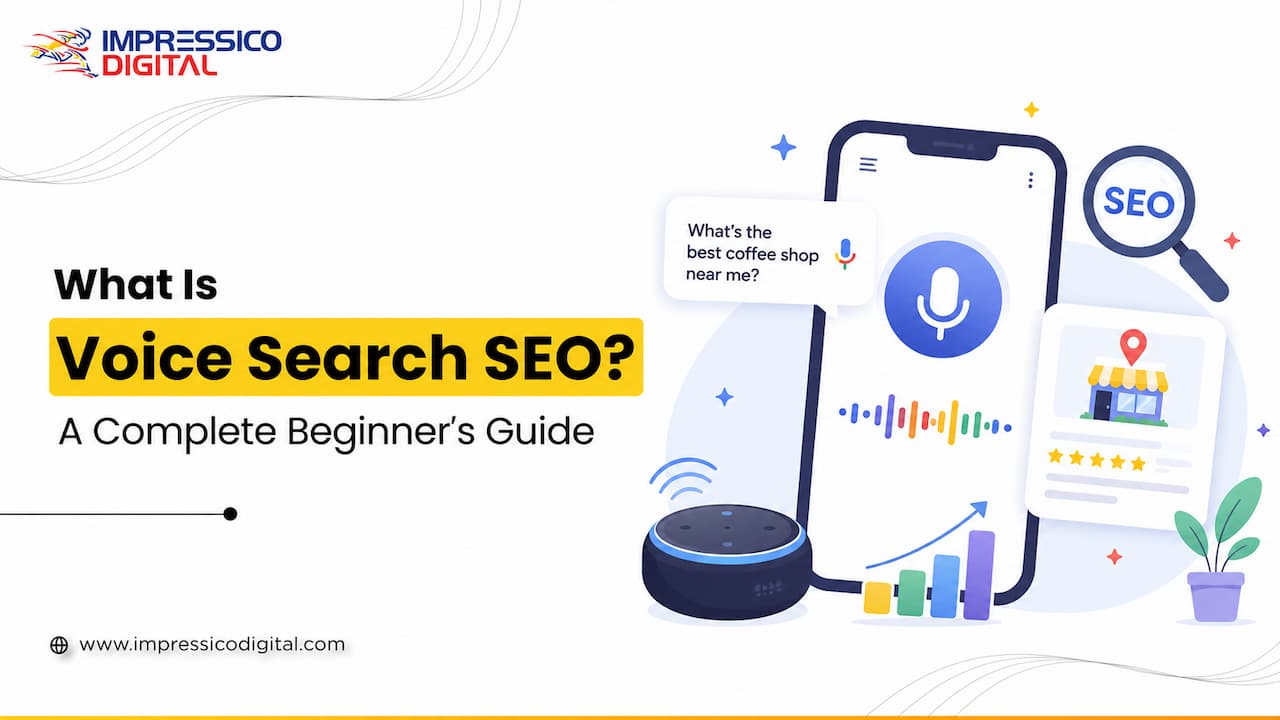
Search behavior has shifted—and quickly. Nowadays, searchers don’t simply type into Google; they talk to it. Whether getting directions via Siri, learning where local stores are from Alexa, or getting quick answers via Google Assistant, voice-enabled search has become a reality.
Therefore, this trend towards conversational search, natural language search, and voice queries raises a new challenge for companies: how do we appear in responses to voice searches rather than typed searches?
Voice search SEO is what comes into the picture.
At Impressico Digital, we see many businesses struggling with reduced visibility, even if they have a “fine” SEO in traditional search. They are not creating content for voice assistants, smart speakers, or mobile search behavior. To succeed in search engine optimization in this new digital reality, an understanding of voice search SEO is a necessity for a business.
How Voice Search Differs From Traditional Text Search
Typed Search and Voice Search are not equal, and treating them the same is the biggest mistake in SEO that we see these days.
With text search, people search using short phrases such as:
- best party location
- party location cost
With voice-enabled queries, however, people speak in a natural way:
- How to bake a cake?
- How much does a party location cost in NY?
With this increased usage of conversational search queries, long tail keywords, and searches using questions, search engines have had to interpret search intent in a different way. Voice search is very reliant on natural language processing.
In spoken search vs. typed search, if your content isn’t optimized for spoken search, it won’t match how people search in a way that’s relevant to natural questions they ask today—and this is where your search visibility will dip.
Key Components of Effective Voice Search SEO
A voice search SEO strategy will include more than optimizing for keywords. Pages optimized for voice will be optimized for ease of understanding, fast recall, and direct answering.
Key components are:
- Question-based keywords reflecting the way people communicate
- FAQ content with informative responses
- Featured Snippet optimization for search engines to quickly display a response
- Mobile optimization and page speed
- Structured Data & Schema Markup
- Strong local SEO for ‘near me’ searches
A voice assistant will be pleased with one right answer. Hence, voice-optimized content, including search snippets, is so important.
How to Do Keyword Research for Voice Search SEO
Traditional keyword research is all about volume. Voice search keywords, on the other hand, are all about intent and semantics.
Rather than keywords, users search for:
- Long tail voice keywords
- Questions used in
- Questions search keywords (“who,” “what,” “where”)
- Locals intend keywords such as ‘near me’ or ‘open now.’
To grasp voice research studies, think of a human speaking into a phone rather than sitting in front of a computer searching a search engine.
At Impressico Digital, we incorporate search intent keywords with actual customer questions to produce content that actually corresponds with how people speak.
Structuring Your Content for Voice — Formatting Tips
Even if your content is good, it will not work if it is not organized in a good way. With voice search, content organization is important too.
Best practices are:
- Short paragraphs with simple language
- Headings and Subheadings
- Bullet points for easy scanning
- Direct responses in 30-60 words
- Dedicated FAQ content sections
Such a structure enhances featured snippet optimization, makes your content very readable, and your page for voice content.
Including schema markup for voice and FAQs will further assist search engines in interpreting and properly indexing your content.
Technical & Site-Level Requirements for Voice Search SEO
Voice SEO not only involves content but also optimized websites when it comes to voice technology.
Essential site-level requirements include:
- Strong mobile device optimization and responsive design
- Page loading speed and site performance
- Secure HTTPS Website
- Clean navigation and positive user experience
- Friendly linked data and schema markup
- Mobile-first indexing
Poor performance of your site in terms of speed and/or on mobile devices will make voice assistants less likely to suggest your site, despite good content.
Local Voice Search: The Importance Behind It
A massive percentage of voice searches have local intent:
- Party location near me
- Party Location open now
- Party Location nearby
That is why local SEO is among the most potent tools in voice search local optimization.
To improve local visibility:
- Optimize your Google Business Listing
- Make sure local business listings are consistent
- Use location-based keywords
- Add local schema markup
- Improve local search optimization
Businesses targeting regional areas can benefit from voice search and achieve high-intent conversion traffic.
Common Mistakes to Avoid in Voice Search SEO
Many brands unknowingly hurt their visibility by:
- Creating content for short tail keywords
- Conversational content ignores
- The omission of schema markup
- Mobile UX and page speed are being overlooked
- Lacking local SEO optimization
- Making complicated paragraphs with many ideas
Such SEO errors cause poor voice search optimization. They can have negative effects, especially when it comes to local businesses.
The Future of Search – Why Voice Search SEO Is Important in 2026 & Beyond
Use of voice search is emerging with increasingly smarter voice assistants with AI technology, voice commerce, and better natural language understanding.
Search engines are increasingly focusing on:
- Contextual relevance
- Conversational answers
- Real-world user behavior
Brands that invest in voice search SEO today have a competitive edge over future SEO trends and search developments.
Conclusion & Quick Voice SEO Checklist for Beginners
Getting started with voice search optimization shouldn’t be stressful. Here’s a quick voice search SEO checklist you can follow:
- Research long-tail voice keywords
- Writing Q&A-based content
- Add FAQs and Structured Data
- mobile UX and page speed
- Optimization for local voice search
- Focus on being featured snippet optimized
So, voice search optimization is the next step.
To construct an all-encompassing, future-proof strategy, you have to take into account everything, whether it’s SEO, PPC, Voice Search, Social Media, etc.
Ready to Optimize for Voice Search?
At Impressico Digital, we assist businesses in capitalizing on search behavior shifts in order to promote growth. If your website isn’t showing up when customers speak, we’re here to fix that.
Let’s make your brand heard. Contact us today.
Want to know more about us? Follow us on social media!