Skip to content
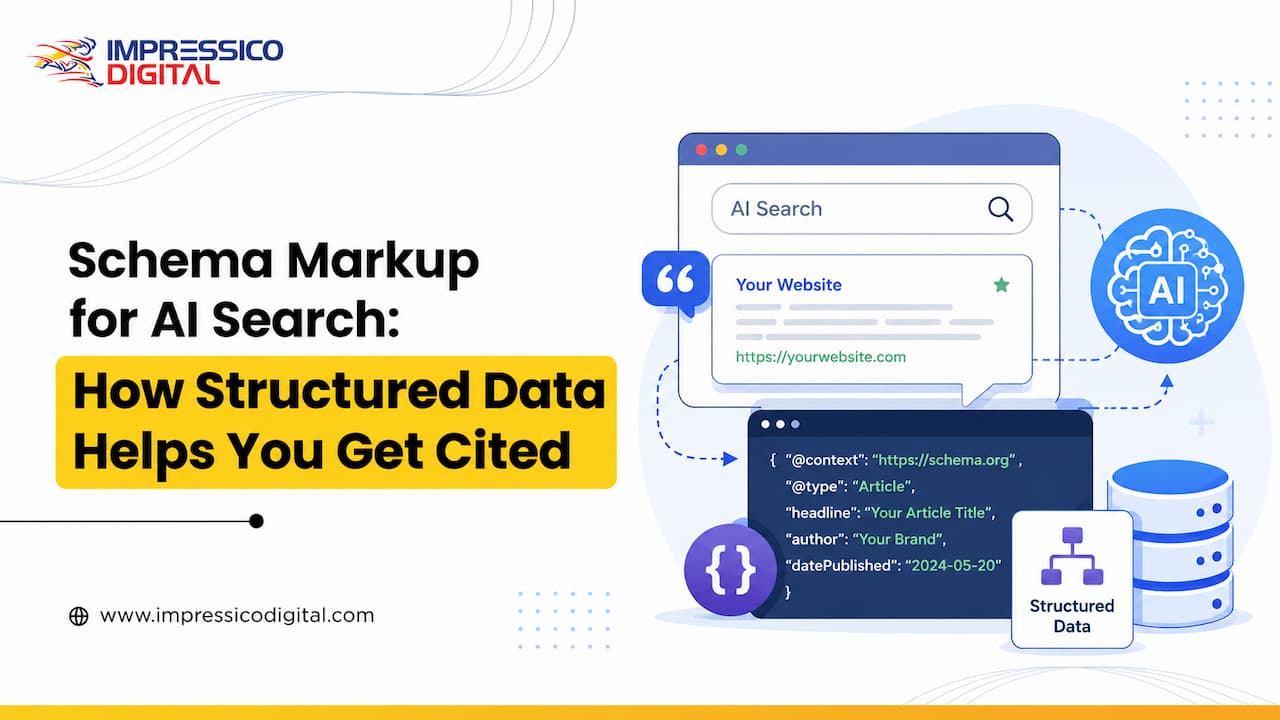
Search is evolving at a quicker pace than many companies have been able to predict. Just a few years ago, SEO was largely about optimizing for blue links, featured snippets, and organic search results. In today’s world, users are now posing questions directly to platforms that use artificial intelligence and large language models like Google AI Overviews, OpenAI’s ChatGPT, Perplexity, and Microsoft Copilot. No matter which one is used, the discovery process of content is no longer keyword-based alone but structure-based, context-based, and trust-based.
That is exactly where schema for AI search becomes important.
However, when these systems crawl the web, they are not merely reading text; rather, they are trying to make sense of connections that exist between people, articles, institutions, products, services, time periods, reviews, and authority. If you manage to establish clear communication of such connections in your content via structured data, your credibility rises considerably.
According to Schema.org, structured data helps search engines and intelligent systems better understand the meaning behind page content. Schema.org documentation remains the global standard for structured content implementation.
At the same time, Google Structured Data Documentation officially recommends structured data as a way to help its systems interpret page information more accurately through machine-readable markup.
And AI adoption itself is accelerating. According to the McKinsey State of AI Report, 78% of organizations now use AI in at least one business function, up significantly from previous years, showing how deeply AI-driven systems are influencing digital discovery.
So if AI is becoming the new discovery layer, the question becomes simple:
Can AI clearly understand your content?
If the answer is not yet, AI schema markup may be one of the biggest opportunities your business is missing.
Schema for AI search is structured data that helps AI systems like Google, OpenAI ChatGPT, and Perplexity understand your content as verified entities instead of plain text. When implemented correctly, structured data for GEO improves machine readability, trust signals, entity clarity, and your chances of being cited in AI-generated answers.
The urgency is real. According to Gartner, traditional search engine volume is expected to drop 25% by 2026 as users increasingly turn to AI chatbots and virtual agents for answers. That shift is forcing businesses to rethink how their content gets discovered online.
What Is Schema for AI Search?
Schema for AI search is basically the code you implement into your website which allows AI to know precisely the nature of your content.
Rather than relying on guesswork as to whether your content mentions a service, an author, a product, or an entity, schema will tell that information to the AI.
For example, schema can help AI understand:
- Who created the content
- Which company owns the website
- When content was published
- Whether the page answers common questions
- Which products or services are being discussed
- How topics connect with other entities
This becomes especially important in generative search because AI systems often summarize information instead of simply listing websites.
If your content is clearly structured, your brand becomes easier to cite.
At Impressico Digital, we see schema not as a technical add-on but as an essential part of modern visibility.
Why Structured Data Matters More in the AI Era
Traditional SEO focused heavily on keywords, backlinks, and content relevance.
Those factors still matter. But AI search introduces another layer: entity understanding.
Large language models work by connecting concepts, people, companies, products, industries, and facts.
That means structured data for GEO is no longer optional for businesses that want visibility in AI-generated responses.
Research from Google shows that users are increasingly engaging with AI-powered search experiences, especially for informational and comparative queries.
At the same time, Gartner predicts that traditional search engine volume will drop significantly as users shift toward AI chat interfaces and virtual assistants.
This means businesses need content that AI can not only read but also trust.
That is where AI schema markup creates a real advantage.
Schema for AI Search vs Traditional SEO Schema
| Factor | Traditional SEO Schema | Schema for AI Search |
| Primary goal | Rich results and enhanced listings | AI understanding and citation potential |
| Core focus | Search snippets | Entity relationships and context |
| Optimization target | Traditional SERPs | AI Overviews, LLMs, answer engines |
| Trust signals | Reviews, ratings, metadata | Expertise, authorship, brand consistency |
| Visibility outcome | Higher click-through rates | Higher citation potential |
This is exactly why AI schema markup is becoming a core part of modern search visibility. Traditional optimization helps people find your website. Schema for AI search helps AI systems connect your expertise, brand authority, and content relationships before generating answers.
How AI Search Reads Content Differently from Traditional Search
Traditional search engines primarily match:
- Keywords
- Search intent
- Backlinks
- User engagement signals
AI systems go further.
They analyze:
- Entity relationships
- Source authority
- Publication metadata
- Expertise indicators
- Content consistency
- Context across multiple sources
For example, when an AI engine finds:
- Author schema
- Organization schema
- FAQ schema
- Article schema
- Review schema
It gets stronger signals about whether your content should be referenced.
This is exactly why schema for AI search supports stronger citation opportunities.
Why Structured Data for GEO Improves Citation Potential
Generative Engine Optimization focuses on helping AI systems choose your content when generating answers.
And AI systems prefer content that is:
- Clear
- Verified
- Context-rich
- Machine-readable
- Consistent
Schema supports all five.
When you implement structured data for GEO, you help AI connect:
Your brand → your expertise → your content → your services → your trust signals.
That relationship matters.
Questions AI Systems Need Answered Before They Cite Your Content
Before an AI engine references your content, it typically looks for trust signals that answer questions like:
· Who published this content?
Clear organization and author schema help AI verify ownership.
· Is the author identifiable?
Named experts, contributors, and leadership profiles strengthen credibility.
· Is the content recent?
Updated publication dates tell AI your information is still relevant.
· Does the brand show consistency across the web?
Matching brand names, social profiles, and business information create stronger entity trust.
· Is the structured data valid?
Broken or incomplete markup weakens machine confidence.
The more clearly your website answers these questions, the stronger your structured data for GEO becomes.
The Most Important Types of AI Schema Markup
Not all schema types deliver the same value for AI visibility.
These are the most important ones for modern websites.
1. Organization Schema
This tells AI:
- Who your company is
- Your official website
- Social profiles
- Contact details
- Brand relationships
This helps AI connect your content with your business identity.
2. Person Schema
This identifies authors, experts, contributors, and thought leaders.
AI increasingly looks for expertise.
Author clarity matters.
3. Article Schema
This helps AI understand:
- Publish date
- Update date
- Headline
- Author
- Topic
This is essential for blogs and thought leadership content.
4. FAQ Schema
Frequently asked questions often appear in conversational search.
Schema makes those answers easier for AI to extract.
5. HowTo Schema
Step-by-step content performs well in voice search and AI assistants.
6. Product and Service Schema
Critical for businesses selling products, software, or professional services.
7. Website Schema
This helps AI understand site hierarchy and brand ownership.
Together, these form a strong AI schema markup foundation.
How to Implement Schema for AI Search
Implementation is simpler than many businesses assume.
Most websites use JSON-LD, which is also recommended by Google.
Google JSON-LD Guidelines
The process usually looks like this:
Step 1: Identify Core Entities
Ask:
- Who are we?
- What do we offer?
- Who creates our content?
- What topics do we own?
Step 2: Map Schema Types
Match pages with schema:
- Homepage → Organization
- Blog → Article
- Author pages → Person
- Service pages → Service
- FAQs → FAQPage
Step 3: Validate Your Markup
Use:
and
Step 4: Maintain Consistency
Your schema must match visible page content, especially when using structured data for GEO to strengthen AI trust signals.
Inconsistencies reduce trust.
Common Schema Mistakes That Prevent AI Citations
Even well-optimized websites often make avoidable mistakes.
· Missing Author Information
Anonymous content creates weaker trust signals.
· Outdated Publish Dates
AI systems value freshness.
· Broken Entity Connections
Your author, organization, and content should connect clearly.
· Inconsistent Branding
Different company names across pages confuse AI.
· Empty FAQ Markup
Markup without useful answers creates low-quality signals.
Avoiding these mistakes can significantly improve structured data for GEO performance.
AI Schema Markup Checklist
Before publishing, make sure your website includes:
- Organization schema
- Author or Person schema
- Article schema
- FAQ schema
- Updated publish dates
- Internal content relationships
- Social profile consistency
- Entity-based brand mentions
- Structured data validation
- Topical content clusters
This checklist may look simple, but these signals often separate websites that merely rank from websites that actually get cited.
How Schema Supports AI Overview Visibility
AI Overviews pull information from sources that appear trustworthy, relevant, and easy to interpret.
Schema strengthens all three.
If you want to understand the practical side of AI visibility, explore our guide on How to Show Up in AI Overviews: Practical SEO Tactics That Work.
Together with schema, content quality, entity consistency, and authority create a stronger AI presence.
Expert Insight
One of the biggest mistakes we see brands make is assuming that great content alone is enough for AI visibility. In reality, AI systems also need clear entity relationships, verified authorship, and machine-readable context. That is why structured data for GEO is becoming one of the most important long-term investments for brands that want to be discovered, trusted, and cited across AI platforms.
Best Practices for AI Schema Markup in 2026
As AI search evolves, these practices matter most:
· Keep entity data consistent
Your brand name, author names, and contact details should match everywhere.
· Connect authors to expertise
Author pages strengthen authority.
· Update structured data regularly
Freshness matters.
· Use semantic content clusters
Related content reinforces topical authority.
· Support schema with strong internal architecture
Content relationships help both users and AI understand your expertise.
At Impressico Digital, we combine schema strategy, content architecture, and AI-focused optimization to help businesses stay visible as search continues to evolve.
FAQs
Does schema for AI search improve rankings directly?
Not directly. Schema improves machine readability, entity clarity, and trust signals, which can improve citation opportunities.
Is structured data for GEO different from traditional SEO schema?
Yes. GEO focuses more on entity relationships, factual clarity, and AI extraction rather than only search snippets.
Which AI schema markup matters most?
Organization, Person, Article, FAQPage, Service, and Website schema usually deliver the strongest foundation.
Does ChatGPT use schema markup?
Modern AI systems increasingly use structured metadata alongside page content to verify entities and contextual relationships.
Is JSON-LD still the best format?
Yes. JSON-LD remains the preferred implementation method recommended by major search platforms.
Should every website use a schema for AI search?
Any business that wants visibility in AI-generated answers should prioritize schema implementation, especially on service pages, blogs, FAQs, and knowledge content.
Conclusion
Search is no longer just about ranking pages. It is about becoming a trusted source that AI systems can confidently reference.
And when your content is structured for understanding, not just indexing, your chances of being cited become much stronger.
That is exactly where schema for AI search, structured data for GEO, and AI schema markup become powerful competitive advantages for brands investing in long-term AI visibility—and at Impressico Digital, we help businesses turn those opportunities into measurable search growth.
Want to know more about us? Follow us on social media!